


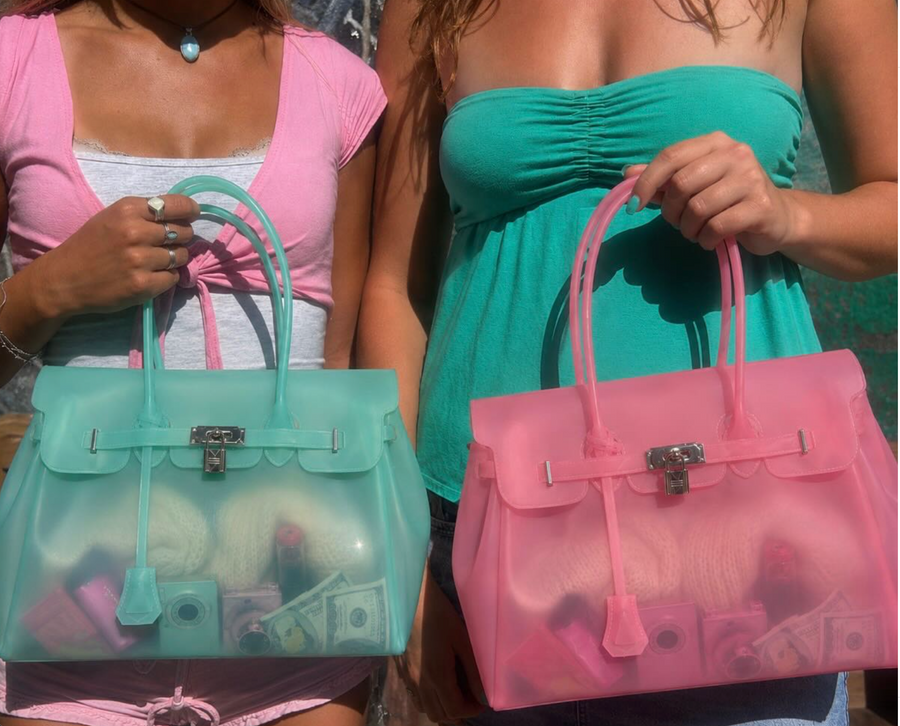
Jelly bags are made from soft, translucent plastics — mainly TPU and PVC, sometimes silicone. This material determines the shine, the softness and the lifespan of your bag. Here's how to tell them apart.
What is a jelly bag made of?
A jelly bag is made from a translucent plastic that mimics a “jelly” look: smooth, glossy and slightly rubbery. The three most common materials are TPU, PVC and silicone.
TPU, PVC, silicone: the comparison
| Material | Feel | Durability | Finish |
|---|---|---|---|
| TPU | Soft and pleasant | High, cold-resistant | Glossy, premium |
| PVC | Firmer | Fair | Glossy, affordable |
| Silicone | Very soft | Good | Matte, rubbery |
Which is the best material for a jelly bag?
TPU is the most sought-after: more durable than PVC, it doesn't become brittle in the cold and keeps a beautiful transparency over time. This is the premium material Firkin Jelly chose for its bags.
How to recognise a quality material?
- A sufficient thickness: the material should be neither floppy nor brittle.
- Little to no plastic smell.
- Careful finishing: a sturdy clasp, topstitched handles, clean seams.
- An even transparency, with no haze or bubbles.
We explain it all in our guide: how to recognise a genuine quality jelly bag.
How to care for a jelly bag?
Whatever the material, care is simple: a soft cloth, warm water and soap. Avoid direct sun and heat. Details in our cleaning guide.
FAQ
Is TPU better than PVC?
Yes, for a bag: TPU is more durable, softer and more stable over time than PVC, even if it costs a little more to produce.
Does a jelly bag smell of plastic?
A quality material has almost no smell. A strong plastic smell is often the sign of a low-end material.
Are Firkin Jelly bags made of TPU?
Yes, they are crafted from a premium translucent material chosen to stay soft, glossy and durable.
New to the jelly world? Start with our guide: jelly bag, what is it? Or discover the full collection.


Comments